
Dental SEO & Marketing Services
Dental SEO That Actually Fills Chairs
77% of patients search online before choosing a dentist. We build SEO and marketing strategies that put your practice at the top of Google when patients search for the treatments you offer.
Get Your Free Strategy Call →
22K+
Monthly Searches
$5-$50
Dental Keyword CPC
3-6 mo
Time to First Results
Month-to-Month
No Long-Term Contracts
Quick Answer
Dental SEO is the process of improving where a dental practice ranks in Google so more local patients find and book with you. It combines Google Business Profile and map-pack optimization, on-page SEO for your treatment and location pages, local content, and review strategy: all measured by new-patient calls and booked appointments, not just traffic.
You are a great dentist. Your patients love you. The problem? Not enough new patients find you.
The practice three blocks away has a packed schedule and a six-week waitlist. They are not a better dentist. They just show up first when someone searches "dentist near me" or "dental implants [your city]." That is not a skills gap. It is a visibility gap. And it is completely fixable.
This page covers exactly how dental SEO works, what it costs, how long results take, and why most dental marketing agencies waste your money on the wrong tactics. We will give you real numbers. Real timelines. No hand-waving.
If you would rather talk strategy than read, book a free call. Otherwise, here is everything you need to know about turning Google into your practice's best source of new patients.
20-30 patients per month.
That is how many new patients the average dental practice loses to competitors who rank higher on Google. With an average patient lifetime value of $10,000-$15,000, that is $200,000-$450,000 in lost revenue every single year.
Why Dental Marketing Requires a Specialized Approach
A restaurant and a dental practice both need local SEO. But the restaurant competes with other restaurants for "best pizza near me." Your practice competes for patient trust around health decisions that cost thousands of dollars and involve real anxiety. The marketing rules are different. Here is why.
YMYL Classification: Google Holds Health Content to a Higher Standard
Google classifies dental content as "Your Money or Your Life" (YMYL). Pages about dental implants, oral surgery, or cosmetic procedures face stricter quality evaluation than pages about gardening tips. Your website needs real E-E-A-T signals: dentist bios with credentials and licensing information, procedure descriptions reviewed by a licensed professional, sourced health information, and a legitimate practice behind the content. Generic content written by freelancers who do not understand dentistry gets filtered out.
Local Intent Dominance: 92% of Dental Searches Are Local
Nobody searches "best dentist in the country." They search "dentist near me," "emergency dentist open now," or "dental implants [city name]." That means your entire SEO strategy must be built around local visibility: Google Business Profile, map pack rankings, location-specific content, and local citations. A dental practice in Kelowna does not need to outrank a practice in Toronto. You need to outrank the 15-30 other dentists in your metro area.
Review Dependency: Dental Has the Highest Review Read Rate
According to BrightLocal's consumer review survey, dental and healthcare providers have the highest review read rate of any local service category. 98% of patients read online reviews before choosing a dentist. A practice with 4.8 stars and 200+ reviews will outperform a practice with 4.2 stars and 30 reviews, even if the lower-rated practice has better technical SEO. Reviews are not optional. They are a ranking factor and a conversion factor.
Multi-Service Targeting: Each Treatment Is a Different Keyword Set
A dental practice offering implants, cosmetic dentistry, emergency care, and general checkups is targeting four completely different patient populations with four different search behaviors. Someone searching "dental implants cost" is in a different stage of the decision process than someone searching "emergency dentist open Sunday." Each treatment needs its own keyword strategy, its own landing page, and its own content approach. One homepage cannot do the work of ten service pages.
HIPAA Compliance: Marketing Has Legal Boundaries
Every piece of dental marketing must comply with HIPAA regulations. Patient photos, testimonials, before/after images, and case studies all require explicit written consent. Your marketing agency needs to understand these boundaries, not just SEO best practices. A before/after gallery that goes viral is worthless if it violates patient privacy and exposes your practice to a lawsuit. We build HIPAA-compliant marketing workflows into every engagement.
The Dental Marketing Reality
Most dental marketing agencies apply the same playbook they use for plumbers and roofers. Dental marketing is fundamentally different because of YMYL classification, HIPAA requirements, high patient lifetime value ($10,000-$15,000), and the trust barrier patients face when choosing a healthcare provider. A healthcare-focused agency understands these differences.

Dental marketing that is built around real practice growth metrics, not vanity numbers.
How We Build a Dental SEO Strategy
We do not sell generic marketing packages. Every dental SEO engagement starts with understanding your practice, your treatments, your market, and your competition. Here is the actual process.
Step 1: Practice Audit + Competitive Analysis
We audit your entire online presence: website speed, mobile usability, on-page SEO, Google Business Profile completeness, review profile, citation accuracy, and content gaps. Then we analyze the top 5-10 dental practices in your area to identify what they are doing that you are not. This takes 5-7 business days and produces a prioritized action plan with specific deliverables.
Step 2: Service-Specific Keyword Mapping
We research every keyword variation for each treatment you offer, filtered by your geographic market. "Dental implants Kelowna" is a different keyword than "tooth implant Kelowna" or "implant dentist near me." We map each keyword to a specific page so there is no overlap, no cannibalization, and no wasted content. This mapping document becomes your content roadmap for the next 6-12 months.
Step 3: Content Strategy (Service Pages + Blog)
Each treatment gets a dedicated service page (your "money page") plus 3-5 supporting blog posts that build topical authority. A practice offering implants might have a pillar page at /dental-implants/ supported by articles about implant costs, recovery timelines, implants vs. dentures, and financing options. This cluster structure signals to Google that your practice has genuine expertise. Learn more about the approach in our dental SEO guide.
Step 4: Google Business Profile Optimization
Since 70% of dental leads come from GBP, this is not optional. We optimize your profile with complete business information, proper service categories, office and team photos, weekly posts with dental tips and promotions, and a review generation strategy. Most practices set up GBP once and forget it. We treat it as a living marketing channel that gets weekly attention. See our dental GBP management service.
Step 5: Review Generation + Reputation Management
We build a review generation system that works within HIPAA guidelines. Post-appointment review request emails with a direct Google review link. Response templates for positive and negative reviews. Monitoring across Google, Yelp, and health-specific platforms. The goal: 4-6 new reviews per month, consistently, without violating patient privacy.
Step 6: Monthly Reporting With New Patient Attribution
You get a monthly report that shows rankings, organic traffic, leads (calls + form submissions), and new patient bookings traced back to organic search. Not impressions. Not bounce rate. The numbers that tell you whether your investment is working. We set up call tracking so every phone lead has a source attached to it.
Dental Services SEO: Different Keywords for Different Treatments
Not all dental keywords are created equal. Implant keywords cost 3-4x more per click than general dentistry keywords, but they attract patients worth 5-10x more in revenue. Here is an honest look at the keyword landscape by treatment type.
| Treatment | Monthly Searches | CPC Range | Competition | SEO Timeline |
|---|---|---|---|---|
| Dental Implants | High (8K+/mo) | $15-$45 | HIGH | 8-14 months |
| Cosmetic Dentistry | Moderate (3K+/mo) | $8-$25 | MEDIUM | 6-10 months |
| Emergency Dentist | High (6K+/mo) | $20-$50 | HIGH | 6-12 months |
| Teeth Whitening | Moderate (4K+/mo) | $5-$15 | LOW-MEDIUM | 4-8 months |
| General / Family Dentistry | High (10K+/mo) | $3-$12 | MEDIUM | 4-8 months |
| Pediatric Dentistry | Moderate (2K+/mo) | $5-$15 | MEDIUM | 4-8 months |
| Invisalign / Orthodontics | High (7K+/mo) | $10-$30 | HIGH | 8-14 months |
What does this mean for your practice? If you offer teeth whitening or general dentistry, you can realistically compete for page-one rankings within 4-8 months at a moderate budget. If dental implants or Invisalign are your primary revenue drivers, expect a longer timeline and a larger content investment. That is not a sales pitch. It is the math.
The CPC column matters because it shows what you would pay per click on Google Ads for the same keywords. A page-one organic ranking for "dental implants [your city]" is worth $3,000-$8,000/month in equivalent ad spend. That makes dental SEO one of the highest-ROI marketing investments available to your practice.
Google Business Profile: Where Most Dental Patients Start
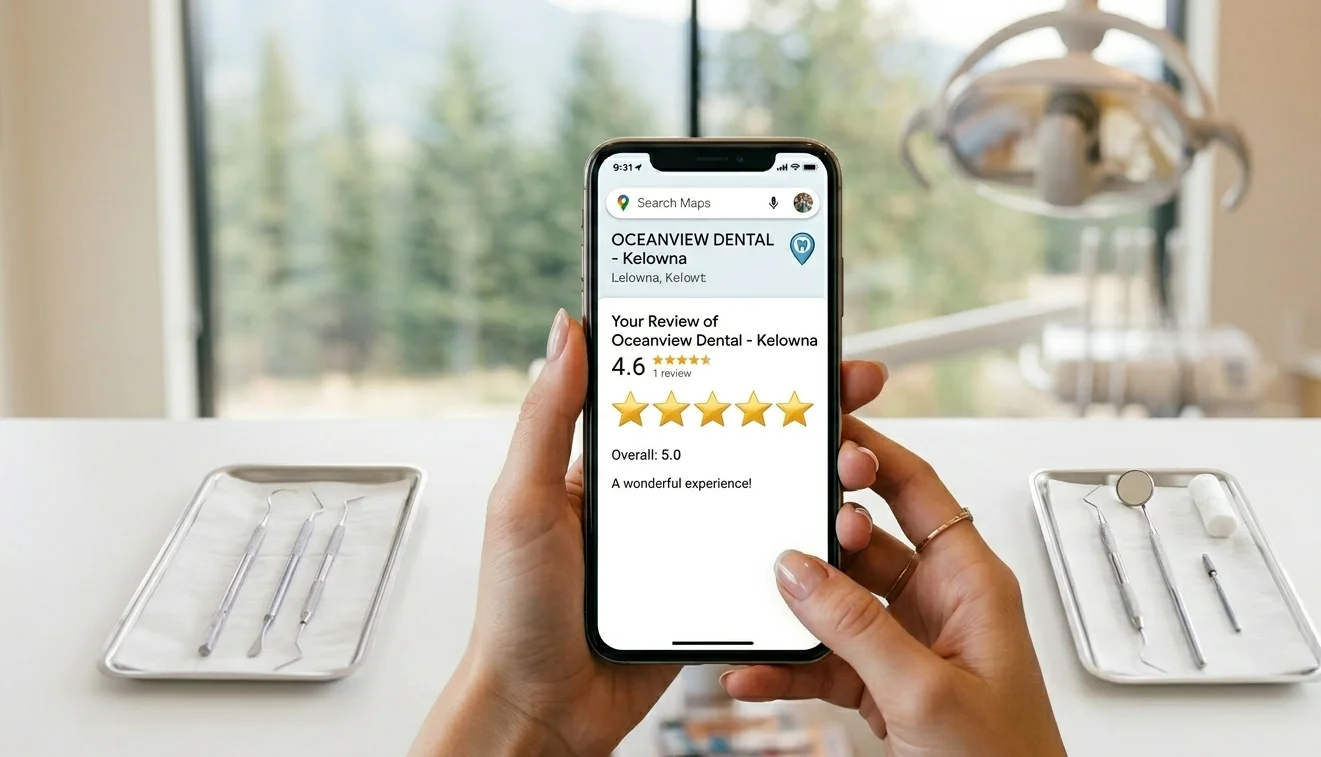
Here is a number that should reshape how you think about dental marketing: 70% of dental leads come from Google Business Profile, not your website. Patients search "dentist near me," see the map pack with three results, check reviews, and call directly from the listing. Your website matters for patients who want more information before booking. But GBP is where first impressions happen.
Most dental practices treat GBP as a one-time setup task. Fill in the address, add a few photos, and forget about it. That is leaving money on the table. Here is what active GBP management for dentists looks like.
Photo Strategy That Drives Calls
Profiles with 100+ photos get significantly more engagement than profiles with fewer than 10. Upload office tour photos, team headshots, treatment room images, and (with proper HIPAA consent) before/after treatment photos. Update photos monthly. Google rewards active profiles with better visibility in the map pack.
Review Generation That Complies With HIPAA
Send review requests after appointments using a compliant email or SMS platform. Include a direct link to your Google review page. Never mention specific treatments in review requests. Respond to every review within 48 hours, positive or negative. Never reveal patient health information in your responses. A practice with 4.8 stars and 200+ reviews will dominate the map pack against a competitor with 4.2 stars and 40 reviews.
Weekly Posts + Q&A Management
Post weekly updates: dental tips, new technology announcements, team spotlights, and seasonal promotions (back-to-school checkups, holiday whitening specials). Monitor and answer the Q&A section proactively. If patients are asking "Do you accept [insurance]?" on your GBP, add that information before they have to ask.

Consistent GBP content, like office photos and team updates, signals to Google that your practice is active and engaged.
Content That Builds Patient Trust
Content is what separates dental practices ranking on page one from those buried on page three. But posting a 300-word blog once a month about "the importance of flossing" will not move the needle. You need treatment-specific content that answers real patient questions and builds trust before they ever walk through your door.
Service Pages: One Per Treatment
Every treatment you offer needs its own dedicated page with 1,500-3,000 words. Dental implants, cosmetic dentistry, emergency care, Invisalign, teeth whitening, pediatric dentistry. Each page should cover the procedure, who it is for, what to expect, recovery timelines, cost ranges, insurance/financing options, and your dentist's specific credentials for that treatment. These are your money pages. The pages that directly drive appointment bookings.
Blog Strategy: 4-8 Posts Per Month
Blog content targets the questions patients ask before they book. "How much do dental implants cost?" "Does teeth whitening damage enamel?" "What is the difference between veneers and bonding?" Each post answers a specific question, links back to the relevant service page, and builds topical authority. We identify the top patient questions for your treatments using Google's "People Also Ask" data and search volume tools.
Before/After Galleries (With HIPAA-Compliant Consent)
Before/after photos are the most persuasive content on a dental website, especially for cosmetic treatments. But every photo requires a signed HIPAA-compliant consent form. We help you build a consent workflow and a gallery template that showcases your results without exposing your practice to liability. Photos should include treatment type, timeline, and (if the patient consents) a brief testimonial.
Patient Education Content
Educating patients builds trust and reduces anxiety, which is a major barrier to booking dental appointments. Create content about what to expect during procedures, post-treatment care instructions, insurance and financing guides, and comparisons between treatment options. This content serves double duty: it ranks for informational keywords and it helps convert visitors into booked patients. Similar principles apply to other healthcare lead generation strategies.
What Dental SEO Costs (And Why It Is Worth Every Dollar)
We are going to be transparent because most agencies are not. Dental SEO pricing varies wildly, and practices routinely overpay for underdelivered services. Here is what the market looks like and where we fit in.
| Practice Type | Monthly Range | What You Get | Expected ROI Timeline |
|---|---|---|---|
| Solo Practice | $500-$2,000/mo | Local SEO, GBP, 2-3 content pieces, on-page optimization, review strategy | 4-8 months |
| Multi-Dentist Practice | $2,000-$5,000/mo | Full-service SEO, 4-8 content pieces, link building, multi-treatment targeting | 3-6 months |
| Multi-Location / DSO | $5,000-$10,000/mo | Multi-location SEO, content at scale, location pages, competitive link building, digital PR | 3-6 months |
Our Approach: Right-Sized to Your Market
Most dental marketing agencies require $2,000-$3,000/month minimum. We start smaller for practices that need foundational work before scaling, scoped on a quick intro call. Why? Because a solo dentist in a mid-size city does not need the same investment as a five-location DSO competing in Vancouver. We would rather right-size your budget and grow it as results come in than lock you into a package you do not need.
The starting engagement covers: technical audit and fixes, keyword mapping, Google Business Profile optimization, and a content roadmap. As rankings improve and patient inquiries start flowing, we scale into content creation, link building, and expanded treatment targeting.
The ROI Math
The average new dental patient is worth $10,000-$15,000 in lifetime value. That includes regular cleanings, treatments, referrals, and the revenue from family members who follow. A dental implant patient alone can be worth $3,000-$50,000 depending on the treatment plan.
If your SEO generates 5 additional new patients per month at a $2,000/month investment, that is $50,000-$75,000 in lifetime patient value against $24,000 in annual marketing cost. Most practices see 3-5x ROI by month 12. The math works because patient lifetime value is so high in dentistry compared to most local services.
Pricing Red Flags
- Under $300/month with big promises: Not enough budget to move the needle. You will waste 12 months and have nothing to show for it.
- Guaranteed page-one rankings: No agency can guarantee this. Google considers 200+ factors. Any guarantee is dishonest.
- 12-month contracts required upfront: A confident agency earns your business monthly. 3-month minimums are reasonable. 12-month lock-ins are not.
- They do not understand HIPAA: If your marketing agency cannot explain HIPAA compliance in patient marketing, walk away. This is not optional for dental practices.
Dental SEO vs. Google Ads for Dentists
This is the most common question we hear from dental practice owners. The honest answer: most successful practices invest in both. But the timing and budget allocation depend on your situation. Here is how the two channels compare.
| Factor | SEO (Organic) | Google Ads (PPC) |
|---|---|---|
| Time to Results | 3-6 months | Immediate |
| Cost Per New Patient | $50-$200 | $150-$500+ |
| Long-Term Value | Compounds over time | Stops when you stop paying |
| Trust Signal | Organic results trusted more | Ad label reduces trust |
| Best For | "Best dentist near me," treatment research | "Emergency dentist open now" |
| Month 12 Cost | Same investment, more patients | Same cost per click |
When to Use Google Ads
Google Ads is the right choice for emergency dentist keywords ($20-$50 CPC, but the patient books immediately), new practice launches that cannot wait 6 months for organic traffic, and specific treatment promotions like teeth whitening specials or Invisalign consultations. The intent behind "emergency dentist near me" is so urgent that SEO alone is not fast enough. You want to be the first result, paid or organic.
When to Focus on SEO
SEO wins for comparison searches ("best dentist near me"), treatment research ("dental implants cost," "Invisalign vs braces"), and long-term patient acquisition. These patients are earlier in their decision process and tend to research multiple practices before booking. Organic results get more clicks than ads for these queries because patients trust them more.
The Combined Strategy
Months 1-3: Run Google Ads for immediate patient flow while SEO foundations are built. Budget split: 60% paid, 40% SEO.
Months 4-6: Organic traffic starts contributing. Scale back the most expensive PPC keywords. Budget split: 50/50.
Months 7-12: SEO becomes the primary patient source. Shift paid budget to emergency keywords and remarketing only. Budget split: 30% paid, 70% SEO.
The key insight: Google Ads costs the same in month 24 as month 1. SEO gets cheaper over time because your cost per patient drops as traffic compounds. That is why the most profitable practices treat SEO as their primary channel and use ads strategically to fill gaps. Learn from common pitfalls in our guide on healthcare marketing mistakes.
Want a Free Dental SEO Audit?
We will analyze your current rankings, review your Google Business Profile, identify the highest-value keywords for your treatments, and show you exactly where your competitors are beating you. No obligation. No generic report.
Get Your Free AuditWhy Choose Zio for Your Dental Marketing
There are hundreds of agencies that claim to do dental marketing. Most of them apply the same template they use for plumbers and restaurants. Here is what makes working with Zio different for dental practices.
No Long-Term Contracts
We do not lock you into 12-month agreements. We earn your business every month with transparent reporting and measurable results. If we are not delivering new patients, you can leave. That is how it should work.
Direct Owner Involvement
You will not be handed off to a junior account manager after the sales call. Sep Gaspari (founder) is involved in strategy and execution for every client. When you call, you talk to the person doing the work. Not a coordinator.
One Practice Per Market
We do not work with competing dental practices in the same geographic area. If we are your SEO partner in Kelowna, we will not take another general dentist in Kelowna. This is in writing. Your investment is protected.
We Understand HIPAA + Dental Compliance
Patient privacy is not negotiable. We build HIPAA-compliant consent workflows for before/after photos, manage review responses without revealing patient information, and ensure every piece of marketing meets healthcare advertising standards. This is table stakes for healthcare marketing, not an add-on.
Custom Websites, Not Templates
Our dental websites are built on modern frameworks with static generation. Perfect PageSpeed scores. Sub-second load times. No bloated WordPress plugins, no cookie-cutter dental templates that look like every other practice in town. Your website should be as unique as your practice. And fast websites rank better. It is not complicated, but most dental web agencies still ship slow, template-based sites.

Your practice deserves a marketing partner who understands the dental industry, not a generic agency applying the same playbook to every business type.
Ready to Turn Google Into Your Best Source of New Patients?
We will audit your practice's current SEO, analyze your local competition, and build a strategy with specific deliverables and timeline expectations. No obligation. No hard sell.
Frequently Asked Questions About Dental SEO & Marketing
How long does dental SEO take to show results?+
Most dental practices see initial ranking improvements in months 2-3, measurable traffic increases by months 4-6, and consistent new patient leads by months 6-9. Local SEO results (Google Maps, local pack) often appear faster, sometimes within 60-90 days. Competitive keywords like "dental implants near me" take longer than general terms like "family dentist [city]." The timeline depends on your current website authority, the competition in your market, and how aggressively you invest in content and link building.
How much should a dental practice spend on marketing?+
The American Dental Association suggests allocating 5-10% of gross revenue to marketing. For a practice generating $1 million annually, that is $50,000-$100,000 per year across all channels. SEO specifically ranges from $500/month for foundational work to $10,000/month for multi-location DSOs. The right budget depends on your market competition, growth goals, and how many new patients you need per month. We scope the program on a quick intro call and right-size it to your market, month to month with no long-term contracts, so you can prove ROI before scaling.
Is Google Business Profile more important than my website?+
For most dental practices, yes. About 70% of dental leads come from Google Business Profile, not the website. Patients search "dentist near me," see the map pack, check your reviews, and call directly from the listing. Your website matters for converting patients who want more information before booking, but GBP is where the first impression happens. The best strategy optimizes both, but if you had to pick one starting point, GBP wins.
Can you help with dental implant marketing specifically?+
Yes. Dental implant marketing is one of our most requested services because the patient lifetime value is so high ($3,000-$50,000 per case). Implant keywords run $15-$45 per click on Google Ads, making SEO especially valuable for this treatment. We build dedicated implant landing pages, implant-specific blog content targeting patient questions (cost, procedure, recovery), and Google Ads campaigns for immediate lead generation while organic rankings build.
How do you handle HIPAA compliance in marketing?+
Every piece of content follows HIPAA guidelines. We never use patient names, photos, or identifiable information without signed HIPAA-compliant authorization forms. Before/after photos require explicit written consent. Patient testimonials and reviews are managed through compliant platforms. We also ensure your website has a proper privacy policy, SSL encryption, and compliant contact forms. If you use patient stories in marketing, we help you build a consent workflow that protects your practice.
What is the ROI of SEO for a dental practice?+
The average new dental patient is worth $10,000-$15,000 in lifetime value. If your SEO generates just 5 additional new patients per month at a $2,000/month investment, that is $50,000-$75,000 in lifetime patient value against $24,000 in annual cost. Most practices see 3-5x ROI by month 12. Implant-focused practices see even higher returns because a single implant case can be worth $5,000-$50,000.
Do you work with competing dental practices in the same area?+
No. We take one dental practice per geographic market. If we are working with a general dentist in Kelowna, we will not take another general dentist in Kelowna. This policy protects your investment and prevents conflicts of interest. We put this in writing in our service agreement.
Should I focus on SEO or Google Ads first?+
It depends on how quickly you need patients. Google Ads delivers leads within days but costs $15-$50 per click for dental keywords. SEO takes 3-6 months but produces leads at a fraction of the cost long-term. Our recommendation: start Google Ads for immediate volume while building SEO foundations. As organic traffic grows, shift budget from paid to organic. By month 12, most practices generate 60-70% of leads from organic search at a much lower cost per patient.
How many new patients can SEO generate per month?+
A well-optimized dental practice website typically generates 15-40 new patient inquiries per month from organic search, depending on market size and competition. Practices in cities with 100,000+ population that rank in the top 3 for their primary keywords often see 30-50+ monthly leads. The key metric is not just traffic but booked appointments. We track the full funnel from search impression to phone call to scheduled visit.
What is included in your dental SEO services?+
Our core service includes: technical website audit and fixes, dental-specific keyword mapping, Google Business Profile optimization, content strategy and creation (service pages + blog posts), review generation strategy, local citation building, and monthly reporting with new patient attribution. Exact deliverables depend on your plan level. Every client gets a dedicated strategy and direct access to the person doing the work.
Related Guides
Dental Marketing
Dental SEO: The Complete Guide
WebsitesHow Much Does a Dental Website Cost in Canada?
GBPDental Google Business Profile Setup Guide
StrategyYellow Pages vs. a Real Dental Website
PricingHow Much Does Dental SEO Cost?
AgenciesBest Dental Marketing Companies Compared
Healthcare & Related
Healthcare Lead Generation Strategies
Med SpaBest Med Spa Marketing Agencies
ChiropracticChiropractic Marketing Mistakes to Avoid
AgencyHealthcare Marketing Agency
Services

Written by
Sep Gaspari
Founder & Digital Marketing Strategist, Zio Advertising | Kelowna, BC
15+ years in digital marketing, Google Ads, and SEO. I've helped businesses across 12+ industries generate qualified leads and grow revenue through data-driven strategies. I don't just run campaigns, I obsess over results, test relentlessly, and treat your budget like it's my own.
Connect on LinkedIn→Last updated: May 2026. Pricing data sourced from dental marketing surveys, ADA Health Policy Institute reports, and client campaign data.